
Introducing EnvAI’s Climate Pathway API
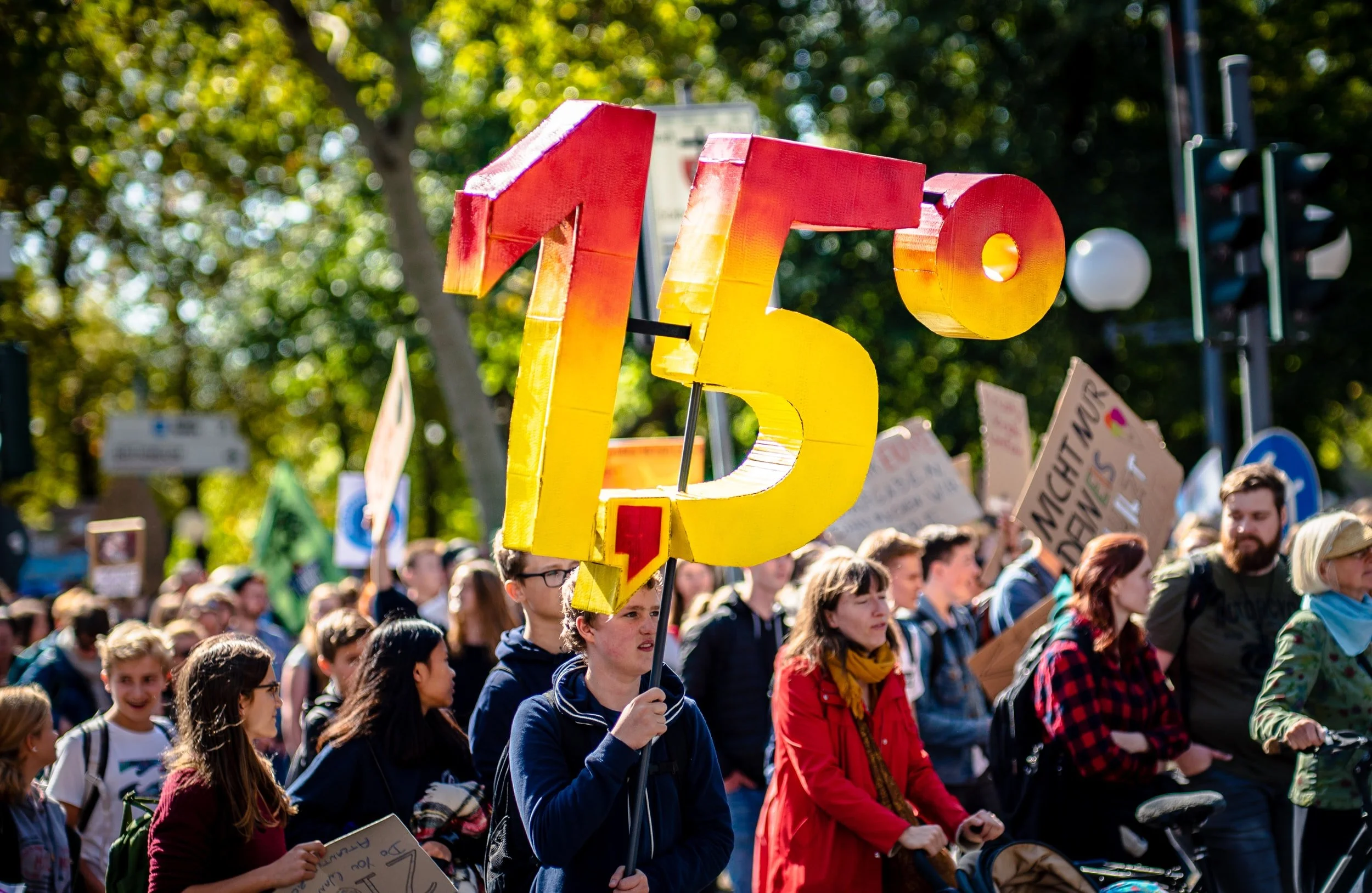
Financial institutions are increasingly pledging to align themselves with concrete climate goals such as the Paris Agreement 1.5°C warming target. Within the last year, 450 banks committed themselves to the agreement, with an increasing number of organizations joining the pledge.
However, while there are numerous platforms for individual corporations to report their emissions and environmental performance, financial institutions have an entirely different challenge:
Given the myriad of ESG data reports, how do institutions bridge the scientific gap between raw data and interpretable climate pathways that are comparable with targets such as the Paris Agreement?
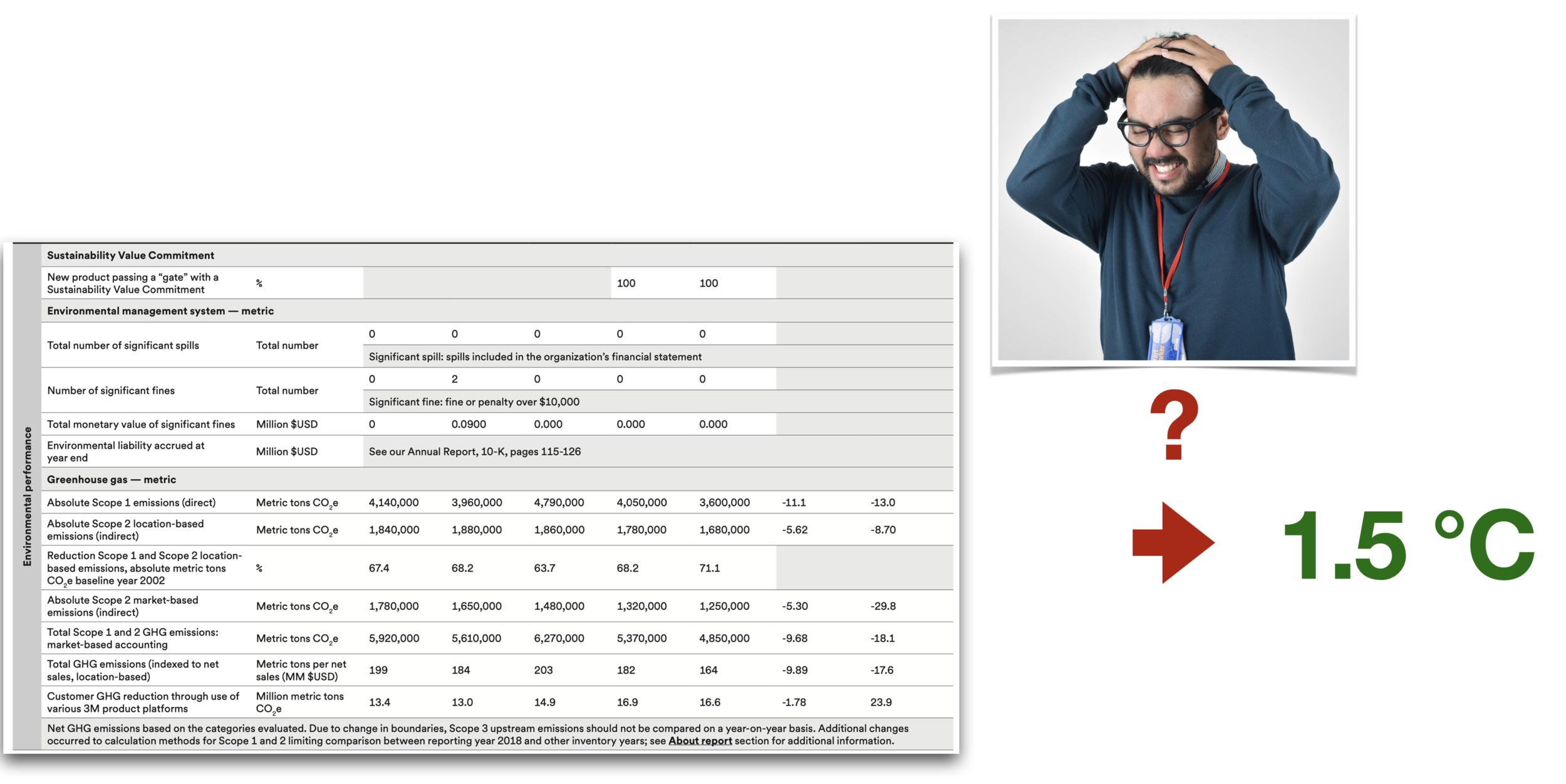
While ESG reporting has been evolving in the past few years, there is still no easy way for financial institutions to bridge the gap from the raw data to interpretable climate pathways. Sample emission report taken from 3M’s public sustainability report.
The need for a new perspective on ESG, based on real climate pathways, is further demonstrated by the new report by the Carbon Disclosure Project (CDP) and World Wildlife Fund (WWF) that translates the future emission reduction targets (not real emission data) of companies into temperature pathways. This provides a concrete framework for assessing self-imposed company emission targets. The CDP/WWF methodology uses a regression model and a series of pre-computed climate scenarios based on the assumption that there is a linear relationship between company target metrics and the global temperature in 2100 (more details on the methodology found here).
Our Climate Pathway API uses real climate models based on trusted and rigorous science to fully model the climate pathway of a company based on its actual present-day environmental impact. We believe that evaluating companies is most meaningful when it based on real performance data, and not self-imposed targets for decades in the future.
How Reliable are EnvAI’s core climate models?
We use trusted climate models to project the temperature pathway of companies. Our models are vetted and use state-of-the-art climate science to run century-wide projections. As a reference point, we replicate the Representative Concentration Pathways (RCPs) as reported by The Intergovernmental Panel on Climate Change (IPCC). The historical and projected emissions for each scenario are provided publicly by the Potsdam Institute for Climate Impact Research, which are shown below:
The bottom panel shows the corresponding temperature pathways that are reproduced by our model from the emission scenarios. Our temperature projections for the end of the century are compared with the mean of more than 30 different models in the the CMIP5 ensemble (Coupled Model Intercomparison Project Phase 5) reported in the IPCC below:
| RCP Scenario | IPCC 2081-2100 Mean Temperature (oC) | IPCC 2081-2100 Temperature Range (oC) | EnvAI's 2081-2100 Mean Temperature (oC) |
|---|---|---|---|
| RCP 2.6 | 1.0 | 0.3 - 1.7 | 0.8 |
| RCP 4.5 | 1.8 | 1.1 - 2.6 | 1.5 |
| RCP 6.0 | 2.2 | 1.4 - 3.1 | 2.0 |
| RCP 8.5 | 3.7 | 2.6 - 4.8 | 3.2 |
The 2081-2100 temperatures are reported relative to the mean of 1986–2005 temperatures. It is clear that our projections are in close agreement with mean of more than 30 climate models reported in the IPCC.
How does this relate to corporate action?
Having shown a successful projection of temperature scenarios at a global level, we asked ourselves if we can help clarify the bottom-line of corporate climate mandates by translating real corporate practices to climate pathways that are directly comparable to established mandates such as the Paris Agreement. Today we are happy to provide that service through the EnvAI Climate Pathway API. We accomplish this by fusing aggregated corporate sustainability data with remotely-sensed insights and trusted climate models in our proprietary computational engine.
By using EnvAI’s Climate Pathway API, analysts can create rigorous hypothetical futures based on the climate pathway of the companies. This makes it easier than ever to assess the environmental impact of corporations without the need to digest indirect ESG data such as company emissions reported across a range of scopes and standards.
As an example, clients can define their model configurations such as emission reduction timespans and magnitudes, thus projecting current company practices into the future without only relying on self-proclaimed emission goals from companies.
The Bottom Line
Our climate pathways provide a more direct and standardized way of assessing the environmental footprint of corporations within the framework of actual climate trajectories. While most companies have mandates such as the Paris Agreement, the currently available data on the market is mostly in terms of qualitative rankings or absolute emissions. We assess the footprint of corporations based on scaled practices, so that they are directly comparable with temperature-based mandates.

Contact us to learn more about EnvAI’s Climate Pathway API!